Tag: leadership

  • The Efficiency Plateau: Why 92% AI Adoption Isn’t Enough


    The Efficiency Plateau Is the Real Story of 2026

    Ninety-two percent of organizations use AI — and only four percent have repeatable workflows. The gap between “using AI” and “AI changed what we can do” is where this year’s winners and losers are being sorted.


    § The Big Picture

    The Trend: The Efficiency Plateau

    Here’s the most important AI finding of 2026, and it’s not the one making headlines. The 2026 Nonprofit AI Adoption Report from Virtuous and Fundraising.AI — and it’s largely true for small businesses and schools, too — shows that 92% of organizations use AI in some form. Sounds great. Until you look one layer down.

    • 65% characterize their AI use as “reactive and individual” — one-off prompts and personal experimentation
    • 18% report operational use across team workflows
    • 7% say AI is embedded in goals, budgets, and performance indicators
    • 4% have documented, repeatable AI workflows

    Pair that with PwC’s 2026 AI Performance Study, which found that three-quarters of AI’s economic gains are being captured by just 20% of companies — and notably, the leaders are focused on growth, not just productivity.

    This is what I’m calling the Efficiency Plateau: AI is being used everywhere, but it’s mostly helping individuals do their existing tasks a little faster. It hasn’t yet changed what organizations can do, decide, or deliver. That’s the gap between adoption and transformation — and it’s where 2026’s winners and losers are being sorted.


    § What It Means for Mission-Driven Orgs

    The Three Unglamorous Things the Leaders Are Doing

    The organizations pulling ahead aren’t the ones with the most AI tools. They’re the ones willing to do three unglamorous things:

    1. Clarify what AI should do for their mission
    2. Establish simple guardrails
    3. Intentionally integrate AI into decision-making — not just task execution

    That’s a strategy conversation, not a technology purchase.

    For nonprofits, this looks like asking “what programs or services could we offer that we couldn’t before AI?” instead of just “how can we write grant proposals faster?” For schools, it looks like redesigning how students learn, not just how teachers grade. For small businesses, it looks like creating new customer-facing services — not just trimming back-office time.

    If you’re only using AI to do your 2024 work a little faster in 2026, you’re not behind — you’re on the plateau. And the teams that leave the plateau first will define what comes next in their sector.


    § Strategic Question of the Week

    Has AI changed what your organization does — or just how individuals do their tasks?

    Sit with it. Bring it to your next leadership meeting. If the honest answer is “mostly the second one,” that’s not a failure — it’s a starting line.

    § Weekend Read

    The 2026 Nonprofit AI Adoption Report

    Virtuous + Fundraising.AI · About 20 minutes. This is the clearest diagnosis of the AI-adoption gap in the mission-driven sector this year, and while the data is nonprofit-focused, the framework (reactive → operational → strategic) applies to small businesses and schools just as well. Read it with your leadership team and use the four levels as a self-assessment.


    The Takeaway

    The Efficiency Plateau isn’t a verdict — it’s a diagnosis. Knowing you’re on it is the first step off it. Pick one thing this weekend: a decision your organization makes repeatedly, a service you wish you offered but haven’t, a question about your mission that AI might help you answer differently. Then start there Monday morning.

    Stay In The Conversation

    Follow Warren on LinkedIn for daily AI insights, nonprofit tech commentary, and strategy threads. If these weekly newsletters resonate, you’ll find more in the daily feed. Connect here.


    Curated by Warren Wiggins · Created by Cousin Claude · Cousin’s AI Circulation, April 2026 · Astute Intelligence — Do More of What Matters.
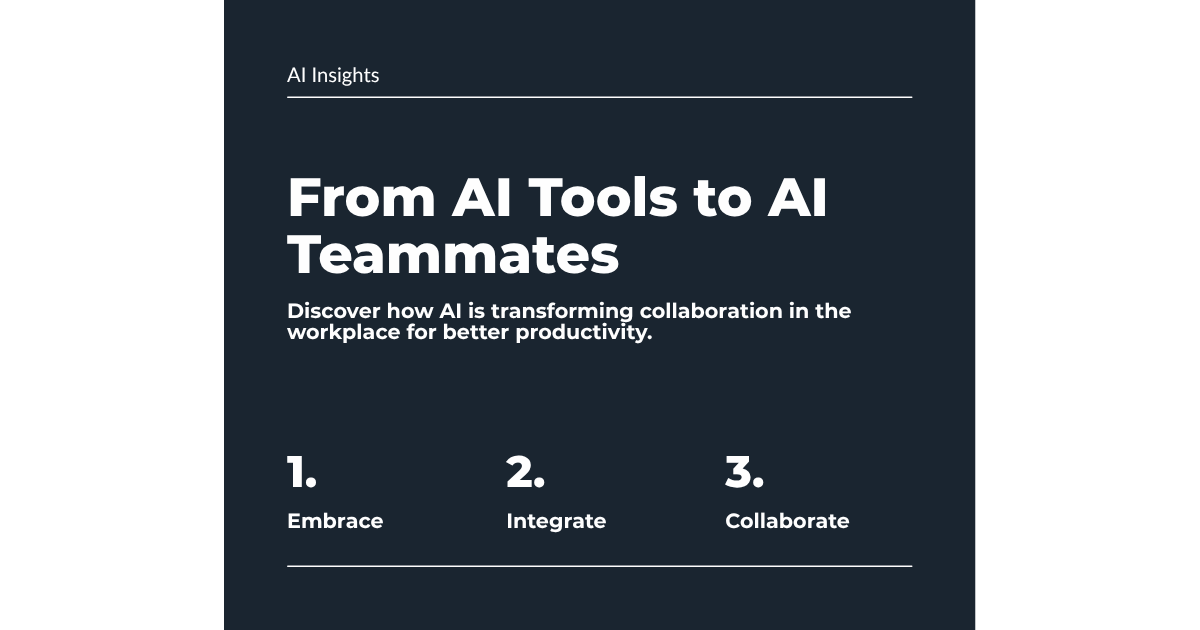
  • From AI Tools to AI Teammates: What’s Changing

    From AI Tools to AI Teammates: What’s Changing

    The Big Picture — Friday, April 17, 2026

    Curated by Warren Wiggins | Created by Cousin Claude


    The Trend: From AI Tools to AI Teammates — The Age of Agent Orchestration

    Something fundamental is shifting in how organizations use AI, and it happened faster than most people expected. We’ve moved past the era of “use ChatGPT to write an email” into something bigger: AI agents that coordinate entire workflows, connect data across departments, and move projects from idea to completion with minimal human handholding.

    This month, Google released its AI Agent Trends 2026 report describing a future where a three-person team can launch a global campaign in days — with AI handling data analysis, content generation, and personalization while humans steer strategy and creativity. Microsoft upgraded its Copilot platform to allow multiple AI models to collaborate on a single task. And the investment tells the story too: venture capitalists poured $242 billion into AI companies in Q1 2026 — roughly 80% of all global venture funding. The money is betting on AI that doesn’t just assist, but actively participates in getting work done.


    What It Means for Mission-Driven Orgs

    Here’s the honest truth: most nonprofits, schools, and small businesses aren’t anywhere close to deploying AI agents. And that’s okay — for now. But this trend matters for two reasons.

    First, it’s changing what your funders, partners, and competitors can do. The organizations that figure out workflow automation early will operate at a fundamentally different speed. A foundation using AI agents to process grant applications can move faster and handle more volume. A competitor using AI to manage their entire content pipeline frees up staff for relationship-building. The gap between AI-enabled and AI-absent organizations is widening.

    Second, it redefines what “AI readiness” means. It’s no longer enough to train your team to use a chatbot. The Harvard Business School AI Trends report calls the new leadership imperative “change fitness” — the organizational muscle to adapt continuously, not just once. That means investing in broad AI literacy across your staff, redesigning workflows (not just jobs), and rewarding learning speed alongside outcomes. Gartner reports that 93% of executives now say factoring AI into business strategy is a must in 2026. Mission-driven leaders need to be in that conversation.


    Strategic Question of the Week

    If your organization could automate one entire workflow — from start to finish — what would it be, and what would your team do with the time it freed up?

    Write it down. Discuss it at your next staff meeting. The answer tells you where AI can create the most value for your mission.


    Weekend Read

    “Invest in the Workforce for the AI Age: A Blueprint for Scale, Skills and Responsible Growth”World Economic Forum

    This WEF report lays out a practical roadmap for organizations navigating the AI transition. It’s written for large enterprises, but the frameworks — skills mapping, responsible AI deployment, workforce transition planning — translate directly to mission-driven organizations of any size. Worth 20 minutes of your Saturday morning.


    Until Next Week…

    That’s your Big Picture for the week. AI agents and workflow orchestration might sound like enterprise-level problems, but the underlying shift affects everyone. The organizations that build “change fitness” now — that invest in learning, in experimentation, in asking “what could we automate?” — will be the ones still thriving in three years.

    You don’t have to be on the cutting edge. You just have to be in motion.

    Follow Warren on LinkedIn for daily AI insights, nonprofit tech commentary, and strategy threads. If these weekly newsletters resonate, you’ll find more in the daily feed.


    Cousin’s AI Circulation — Published 3x/week (Monday, Wednesday, Friday)

    Curated by Warren Wiggins | Created by Cousin Claude

    Astute Intelligence: Do More of What Matters.